
The U.S. Plastics Pact works with its member Activators to advance voluntary efforts to reduce the use of plastic packaging resins, components, and formats identified as problematic or unnecessary based on the USPP’s circularity criteria, with the goal of accelerating progress toward a circular economy for plastic packaging in the United States.
Definition of "Problematic or Unnecessary Materials"
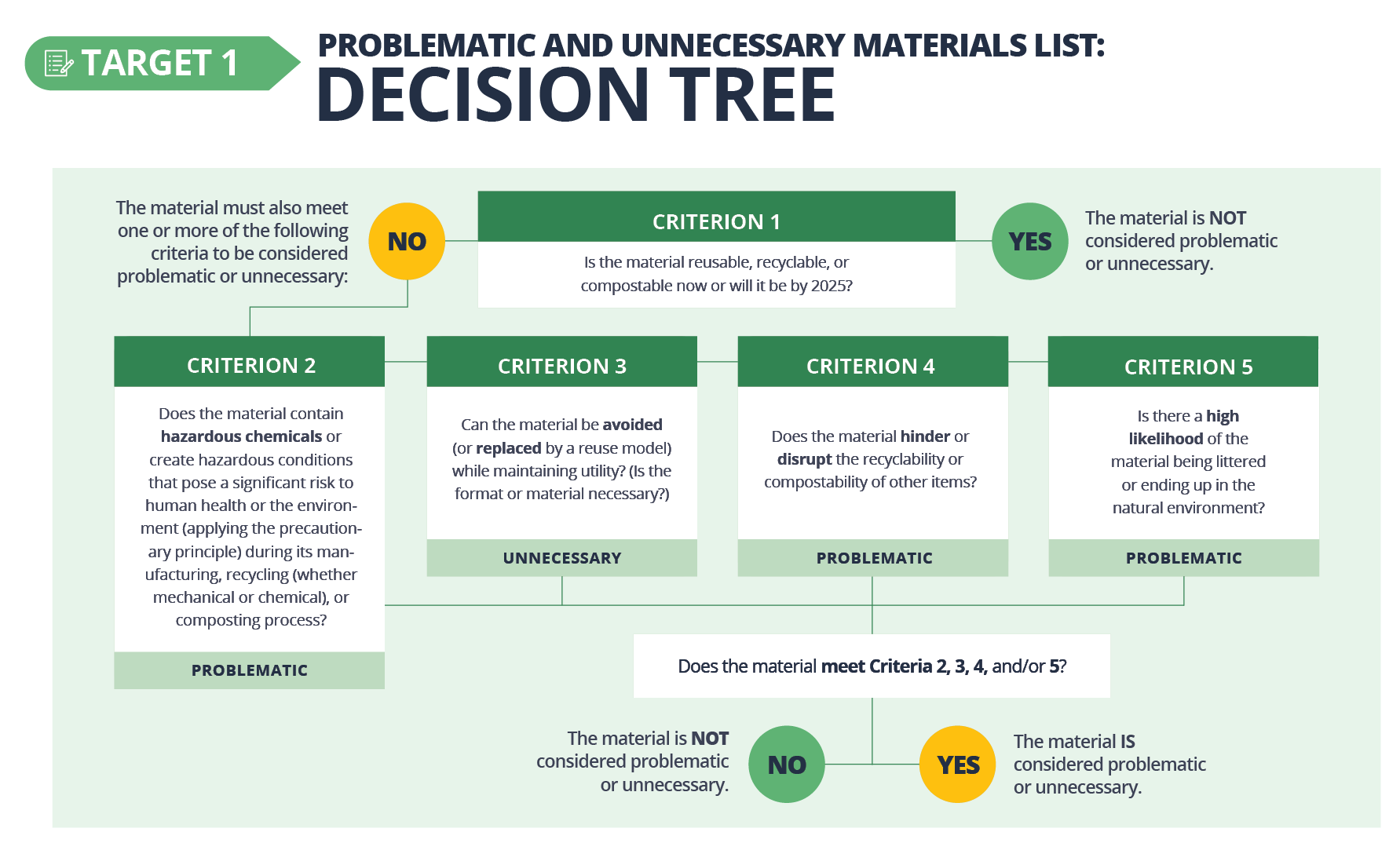
Plastic packaging items, components, or materials where consumption could be avoided through elimination, reuse or replacement and items that, post-consumption, commonly do not enter the recycling and/or composting systems, or where they do, are detrimental to the recycling or composting system due to their format, composition, or size.
Process
The list was developed by USPP Activators, representing the expertise and experience of companies and organizations across the plastics packaging supply chain. The materials on the list were evaluated in accordance with the criteria and definitions using the most comprehensive, publicly available data from federal and state agencies, nonprofits, and trade associations. The list of sources is not exhaustive.
USPP’s adaptations to The Ellen MacArthur Foundation Global Commitment Criteria for identifying problematic or unnecessary plastic packaging components are provided in italics.
Definitions, Criteria, and Data Examples Used
The purpose of the Problematic & Unnecessary Materials List is to provide guidance for identifying materials that, based on current technical assessments and available information, may not have a clear pathway to circularity and may present additional challenges, such as disrupting the circularity of other materials or contributing to other health or environmental impacts. These assessments are based on third-party data and are subject to change as new information, technologies, and infrastructure become available.
To provide additional clarity on the process and data sources used in the evaluation, the Definitions, Criteria, and Data Examples paper is provided. This paper outlines key considerations in assessing the circularity of a material and identifies relevant data sources that may be used in the assessment. The information is illustrative and not exhaustive.
Some materials identified on the list may achieve improved circularity outcomes through targeted interventions. The information in this document may also serve as a guide to relevant data sources that can be used to demonstrate such improvements.
This guidance is intended as a resource to support circularity assessments. The USPP does not require implementation of any recommendation or conduct enforcement.

Exclusions
The list applies exclusively to plastic packaging. Medical plastics used in clinical, hospital, and related laboratory and research settings are not included. Definitions used in the criteria derive from the Ellen MacArthur Foundation’s global Plastics Pact Network, which provides the framework for the USPP.